
Cleopatra built a perfume that summoned you to walk towards it. When smelling a Creed perfume at Selfridges, I tasted my grandmother's fereni (rice pudding); why these are significant for someone designing events.
I can't stop thinking about Cleopatra.
I feel completely under her spell 2,000 years later. I can't imagine what Mark Antony felt when her golden barge came up the Cydnus towards Tarsus in 41 BC.
He must have ascended to a different realm entirely.
You see, there are simple ways of doing something. Standard ways. You can't expect incredible results from doing the same as everyone else, and Cleopatra knew this.
Cleopatra had a mission. She knew what she wanted; she understood the game she was playing and completely flipped the narrative.
Allow me to explain what happened and why this matters to anyone who wants to host an event, create a space for people and build community.
On "Cleopatra and the Golden Barge."

Imagine this: it is 41 BC, Mark Antony summons Cleopatra VII to Tarsus (modern-day Turkey). She had her own agenda too; she needed to secure her throne and power as the Queen of Egypt, prevent Rome from annexing her kingdom and establish a vital alliance with Antony… who just so happens to control the eastern half of the Roman world.
She was busy, to say the least.
He waited on his tribunal in an emptied market square, two miles from the river.
By the "normal script," the ship would have arrived, and you would see her on it.
Nothing could be further from the truth.
She understood that when introducing herself in a completely male-dominant space of rulers and kings, she wouldn't be able to beat them in their own carefully designed game.
Cleopatra re-wrote the game narrative instead.
The first sign of Cleopatra was not Cleopatra. You couldn't see her. It was scent. Perfume carried on the wind, announcing her presence before her ship broke the horizon.
Everything else followed after: from the golden prows catching sunlight like fire, sails of Tyrian purple (the dye reserved for Rome's highest ranks, here unfurled by a queen who bowed to no Rome), silver oars cutting the river and purple draperies embroidered with gold.
But who cares about all that, because the scent reached Mark Antony first, and that's the part I can't stop thinking about.
Cleopatra leaned into her femininity to provide a refreshing contrast to a space filled with masculinity, war and sweat. She played with the concept of "novelty" and the human desire for surprise.
Smell is a sequence, not a mood.
We can agree that a story consists of a three-part sequence, but so does a perfume:
Beginning —> Top note
Middle —> Heart note
End —> Base note
For context:
Top note opens the fragrance, lasting ~5-15 mins before transitioning to deeper layers. Fleeting, yet it creates the first impression.
Heart note is the heart of the fragrance, lasting ~20-60 mins. It defines the perfume's character and provides balance between the fresh opening and rich base notes.
Base note anchors a fragrance, providing depth and lasting power for ~6+ hours.
Cleopatra's golden barge:
At the bow —> Frankincense
Mid-ship —> Kyphi
At the stern —> Rosewater
Essentially, through time, the realisations of the essence of Cleopatra followed this timeline:
Divine to sacred to human.
This blew my mind.
(For historical accuracy's sake, be aware that Plutarch was the one to describe the perfumes, but the specific placement of the three incenses is based on a modern reconstruction.)
Antony could have looked away from the barge. He could have stayed on his tribunal and refused to be impressed. Every other element on that ship required him to look. It needed his consent.
Scent required nothing of him at all. You cannot close your nose. It was the only element of that arrival he could not decline, and it was the one she sent ahead from the distance.
She reframed the negotiation before either of them had spoken a word.
Oh, and while I am describing the story, let me tell you that she didn't get off the ship. He joined it instead, exactly by design.
She sent the smell ahead and then stayed on the ship, declining his invitation and issuing her own. Everything I know about hosting says to welcome guests in, but she did the opposite and held back. The man who'd summoned her to answer charges spent three nights dining on her ship instead.
On creating "memorable moments."
In The Power of Moments, Chip and Dan Heath argue that memorable moments operate through four mechanisms: elevation, insight, pride, and connection.
What Cleopatra built is elevation with rather aggressive force, heightening sensory appeal, thereby raising the stakes and breaking the "script" (the traditional way of doing things) all at once.
What is interesting is that she left something out. There is no connection here, as the crowd watches without participating.
I never considered the power of smell.
There's a version of me before the five-hour deep dive, and a version after.
If someone asked which of the five senses you'd give up, what would you say?
I'd have said smell.
Pure ignorance.
Smell has become a background sense, and here's what I found once I stopped ignoring it:
The secrets of the brain may sit closer to the nose than anywhere else. Smell warns us, shifts our mood, and hooks memory harder than anything else we've got.
Body odour is dynamic. It changes with activity, fine, obvious, but it also changes with mood.
That second one stopped me. If mood produces odour, then odour can produce mood, and as someone designing rooms, I should choose the smell to match the feeling I want in it.
I still don't know what to do with that, though.
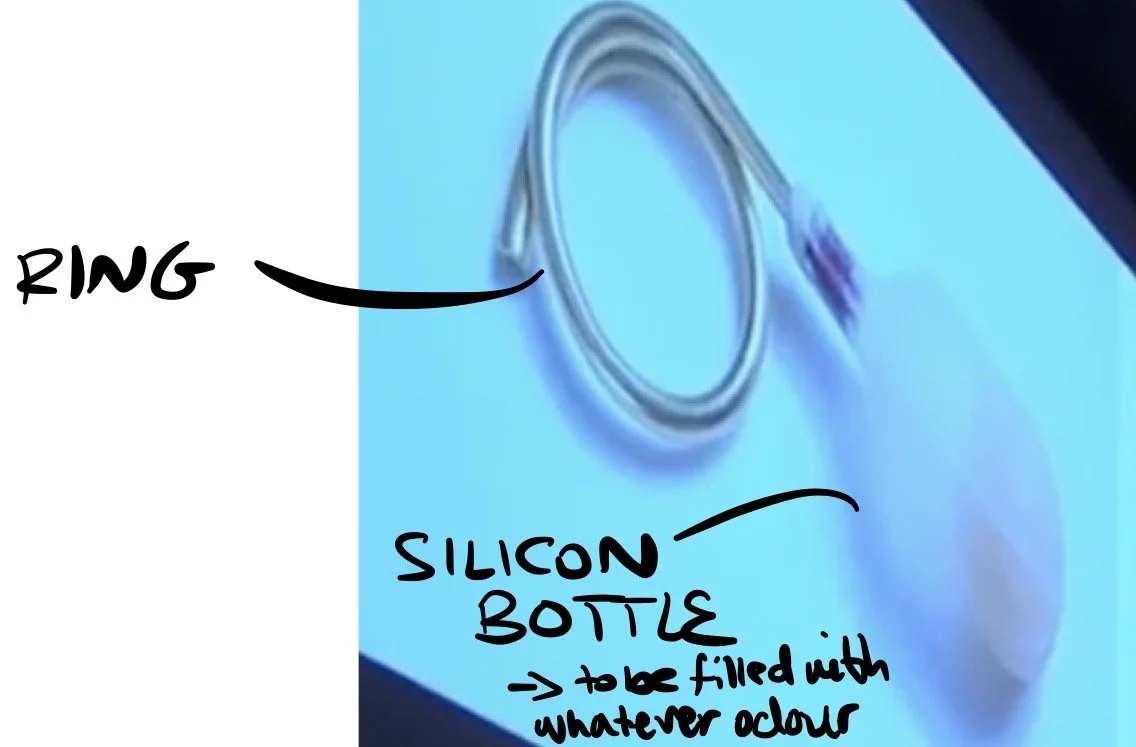
I came across Omer Polak, a designer in Berlin working on sensory experience, who built a ring mounted with a small silicone bottle you fill with different odours like sweat, rosemary, whatever effect you're after. The idea that you could secretly alter a social interaction through jewellery is either brilliant or slightly sinister, and I haven't fully decided, but I favour the former.
Creed "Love in White" changed me.
I went into Selfridges three days later, after learning about the Cleopatra story, and told my friend we had to go to the fragrance floor.
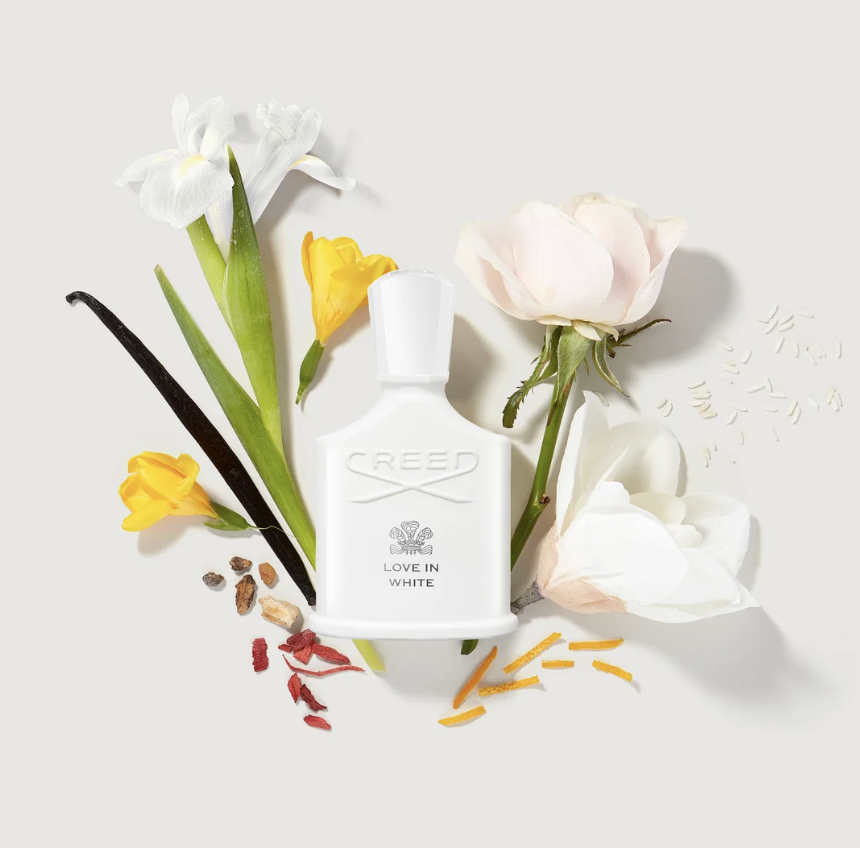
We went to the Creed counter, and the lady sprayed "Love in White" on a perfume tester strip, and it felt like the world stopped and I was transported to my grandmother's house. I was around 8 years old, sitting at the dining table with my feet hanging in the air as I kicked with excitement at her incredible fereni, a chilled Persian rice flour pudding infused with rose water. I tasted it. As though she had thoughtfully spooned some and lovingly handed it to me.
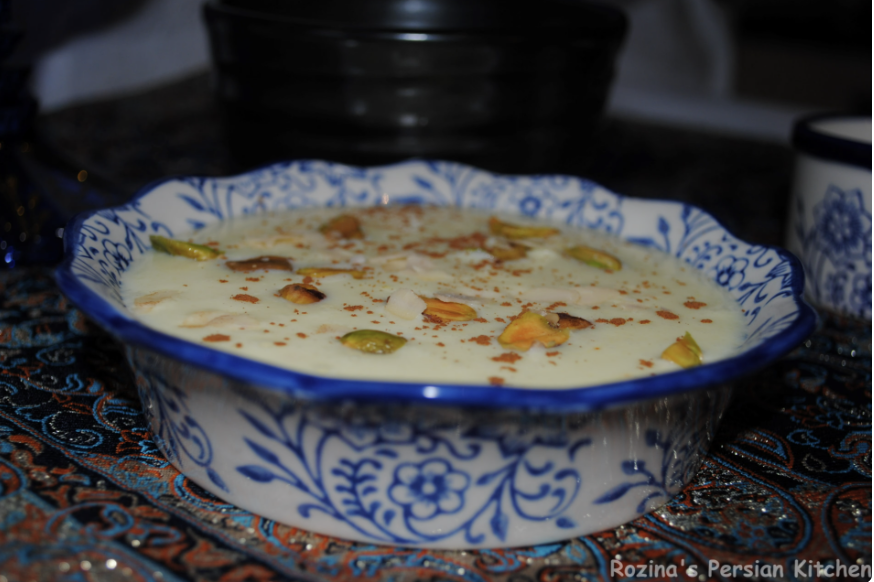
I hadn't asked for that memory. I had no say in it.
I looked at my notes on the perfume again and realised that Love in White's heart note is narcissus, iris, jasmine, magnolia and… rice and rose. The two things that make fereni fereni, sitting in the middle of the pyramid.
It wasn't that it reminded me of my grandmother's kitchen. It contained it.
This was the moment when Mark Antony stopped being a historical figure to me. He was standing on a riverbank having something happen to him that he didn't consent to, like myself in Selfridges.
I also couldn't believe I used to judge a perfume by my wrist in a few seconds and decide whether it was good or bad based on it.
That's saying I didn't like the opening of the film so I won't watch the rest. An absolute injustice. If I'd done that at the counter, I'd have walked out before the rice ever showed up.
What smell puts you somewhere else immediately, without warning?
"A scent is a story unfolding in real time," I caught myself saying.
Notes for the next event I help design.
Artemis,
Scent the entrance. It is the only place where smell does something no other sense can: it reaches people before they've decided anything.
Change the scent at least once. Entrance, main room, and, ideally, exit: three different scents.
Make the last scent warm. For example: sandalwood, vanilla or amber so it clings to clothes and the memory attaches. Place it near the exit or at the end of the event. This is the base note doing its job.
Add a smell that people can't name. For example, petrichor (wet earth), geosmin (after-rain soil) or antique paper. Anything earthy and material-based. Familiar smells get ignored.
Things I haven't worked out yet.
What does the feeling of connection smell like?
What does the process of gaining insight smell like?
How do you achieve any of this in low-budget spaces?
Industry questions I have.
Has a perfumer ever built something knowing it wouldn't be liked for the first ten minutes?
At what point does a signature scent stop being an arrival and start being wallpaper... and does anyone measure that?
I want to ask a museum curator whether they've ever considered what a gallery smells like, or whether conservation rules make that impossible.
