
What Makes a Space Move Us?
What Dubai's Museum of the Future, a redrawn Tube map and an exhibition entrance taught me about designing spaces around how we want people to feel; why we should consider what we want a space to do to the person standing in it.
I have stood in a lot of beautiful rooms that did nothing to me.
Why? They were stunning and, of course, photographed. But what I found myself saying was stunning for who? The camera on my phone, or the person holding it?
I keep coming back to one line in my notebook: every space does something to the people inside it, whether it's positive, negative, or neutral. It calms them, rushes them, awakens them or wears them out. Most of the time we don't decide what that something is, so the room decides for us.
To be clear, a beautiful room isn't the problem; that is great and all, but on my quest to "break the script..."
I've started to notice a particular kind of hollow feeling, the one you get when a space was designed for the feed rather than the person.
A museum with no permanent collection.
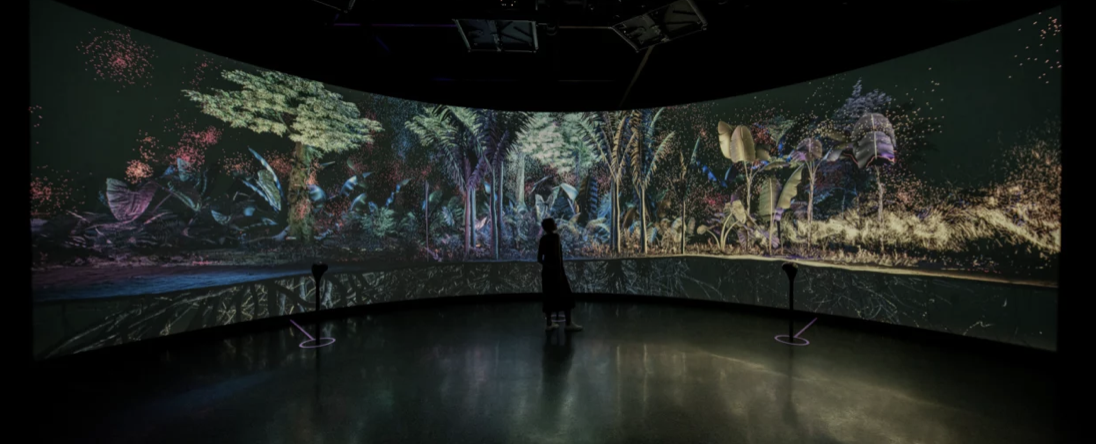
The Museum of the Future in Dubai started from a problem rather than a building. The team behind it named it a crisis of imagination: people had stopped believing a better future was possible, or that they had any part in making one.
So that became the museum's reason to exist. Every room is set in a single year, 2071, and every room is designed to feel incomplete until a visitor acts. You don't look at the future. You contribute to it.
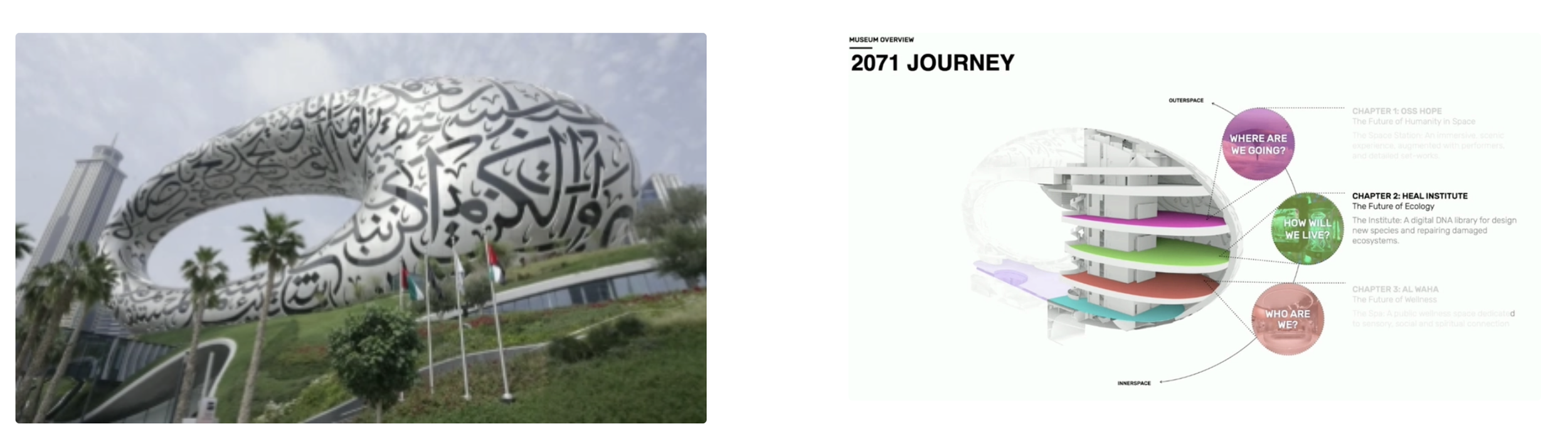
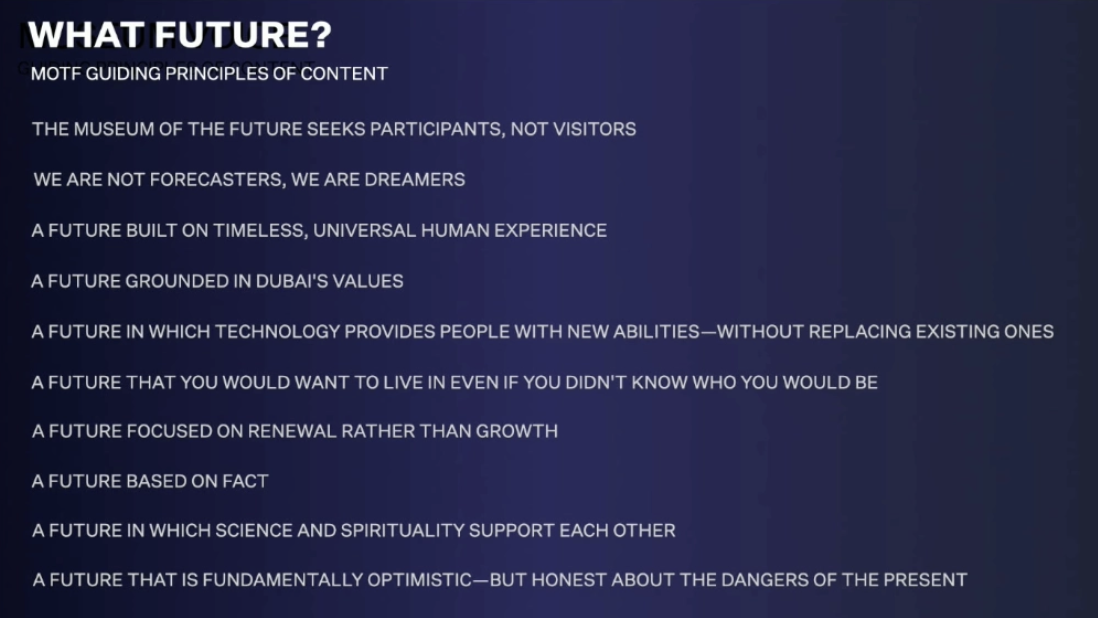
What stopped me was how consistently they kept that promise. A traditional museum has a permanent collection. This one never could. So instead of a permanent collection, they wrote permanent questions, a set that every single piece had to answer before it was allowed in.
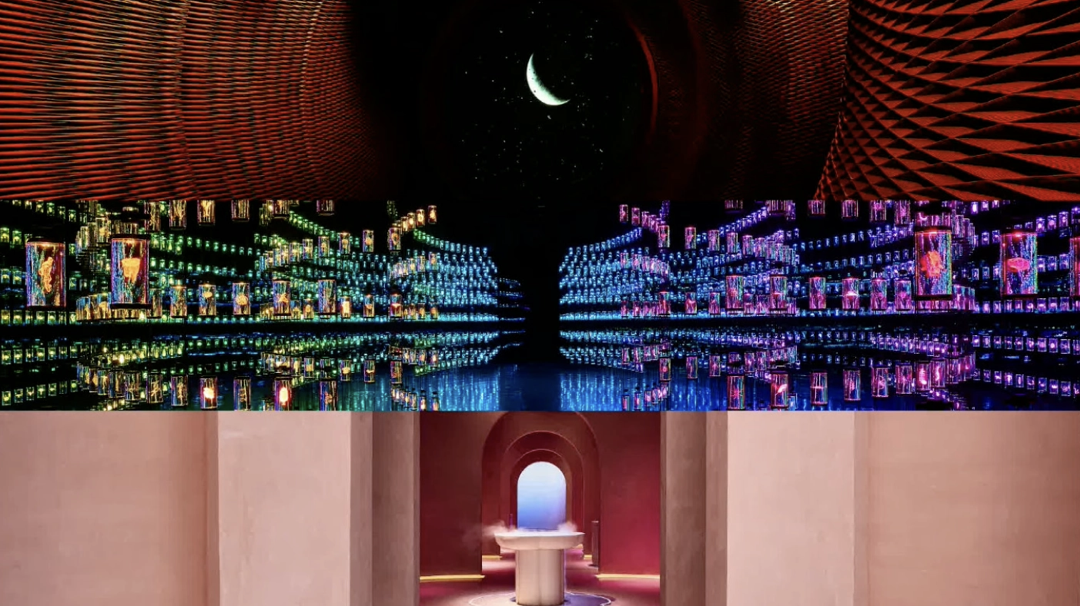
What stopped me was how consistently they kept that promise. A traditional museum has a permanent collection. This one never could. So instead of a permanent collection, they wrote permanent questions, a set that every single piece had to answer before it was allowed in.
Then there's the forest room inside the HEAL Institute, a fictional future where the ecosystem has collapsed, and people are turning frightening new technology towards repairing it. They made a bespoke scent for that room. It smells like the Amazon, and then, quietly, it doesn't. Something artificial is woven through it, because you are not in the Amazon but rather standing in a model of what we lost.
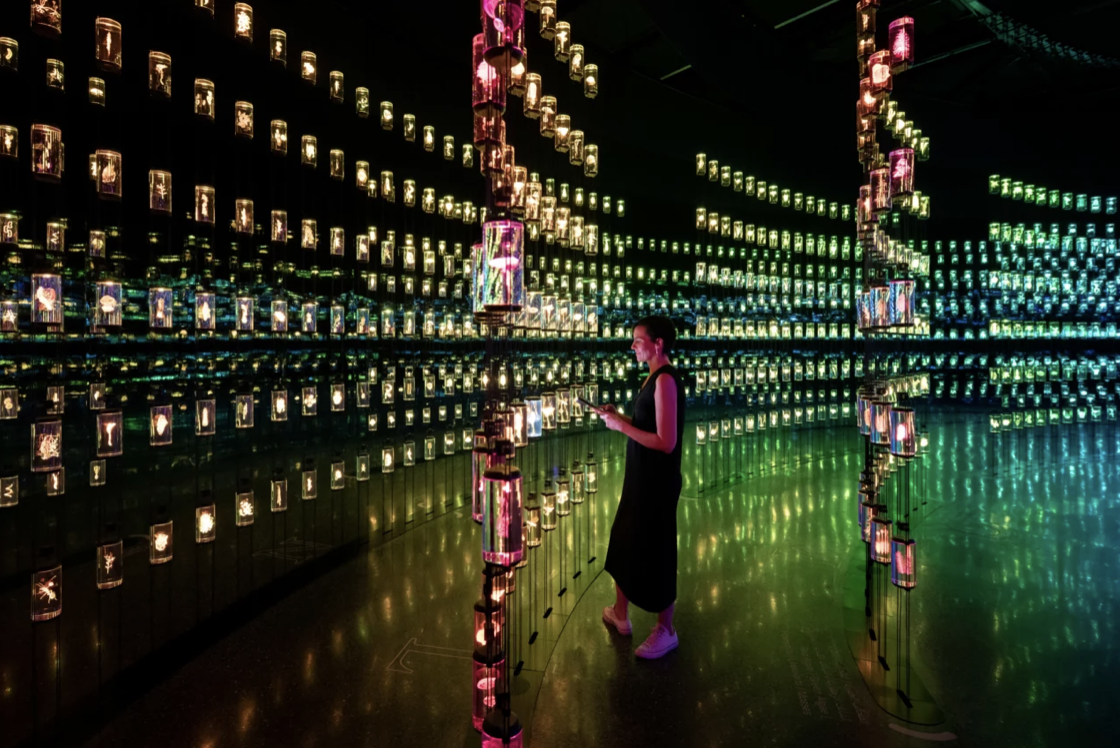
The smell isn't decoration.
But rather, the smell is the argument.
One of the designers said something in a talk that I wrote down and underlined twice: novelty and spectacle on their own have run out as a strategy, and what's left is the harder job of making something authentic and meaningful.
Grabbing attention is step one. Knowing what to do with it once you have it is the actual work.
Current working thesis on this matter.
Maybe a space doesn't move us because of what we see.
A space moves us when it changes something in our body which links to our physiology, on purpose, for a reason.
Not just "how does this look?" but "what do we want to do (transformation) to the person standing in it?"
A narrator, some rocks, and a room I still think about.
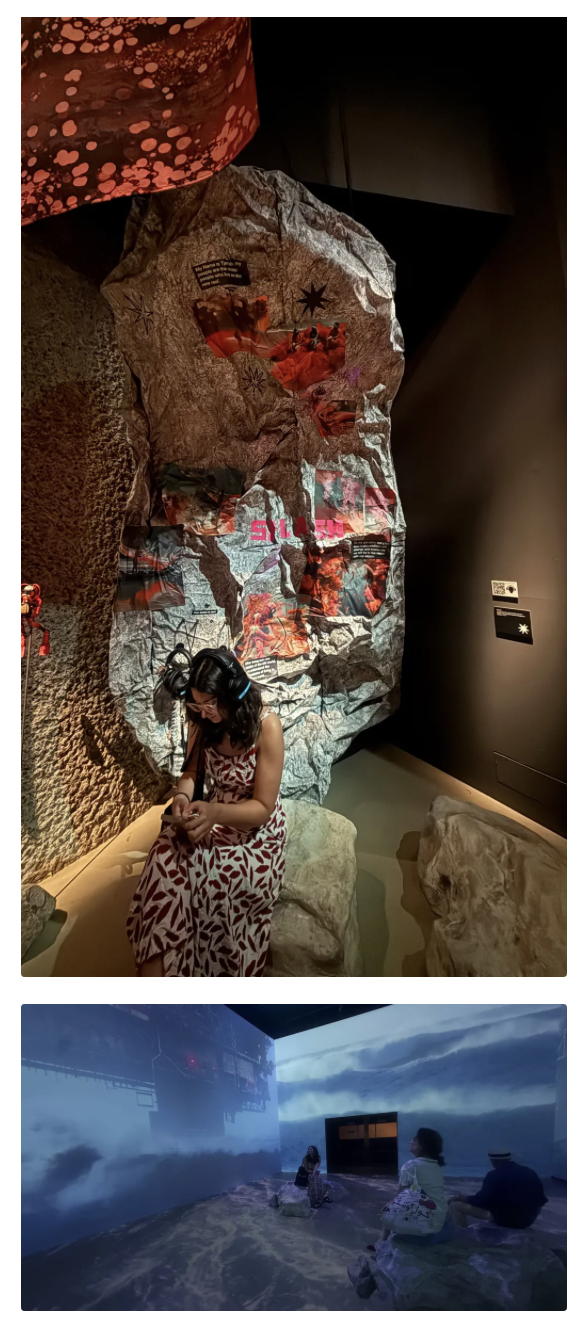
In August, I visited Liam Young's "Other Worlds" exhibition at the Barbican Centre in London, where it used real technologies and climate-based solutions to reimagine the futures we could have if we actually implemented them through a multi-sensory, immersive experience with large-scale films, audio, soundscapes, and set design. It explored a series of imagined futures, immersing visitors in the consequences and opportunities of today's climate decisions.
Before I entered the main installation, I had to stand in a small space with a narrator and some rocks.
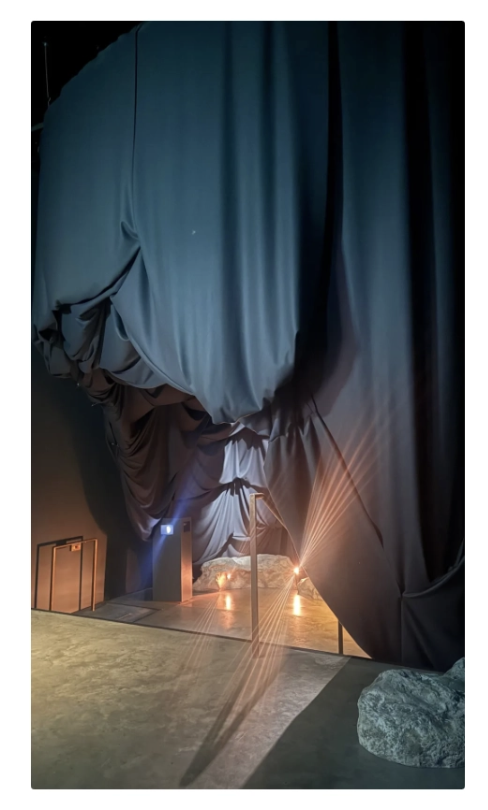
At the time, I thought it was a strange little waiting room, but now, looking back, I think it was the most important room in the entire exhibition.
So I looked into neuroaesthetics to find some answers (the neuroscience of how aesthetic experiences affect us). The truth is that to find meaning in something, you need context for why it matters. You have to prime people. That small room set up the story I was about to walk into, so by the time I arrived, I already knew how to feel it.
In a study, two groups were given the same environmental facts. One group got them as facts and the other as stories. The story group went on to change more of their behaviour to be more pro-environmental, and the reason was physical: their bodies rose and fell with the story arc. Shifting someone's physiology is what moves them to act. The feeling is the meaning, not a side effect.
That means every sense has a way to play with and cultivate space for an immersive, multi-sensory experience. There's so much you can play with to move someone: scent, sound, temperature, light, the texture under your hand. You go backwards and consider how a simple citrus perfume can wake you up; the traffic outside your window makes you tense, whether you notice it or not. Aesthetics aren't a room's visual finish; they're everything acting on you, all the time.
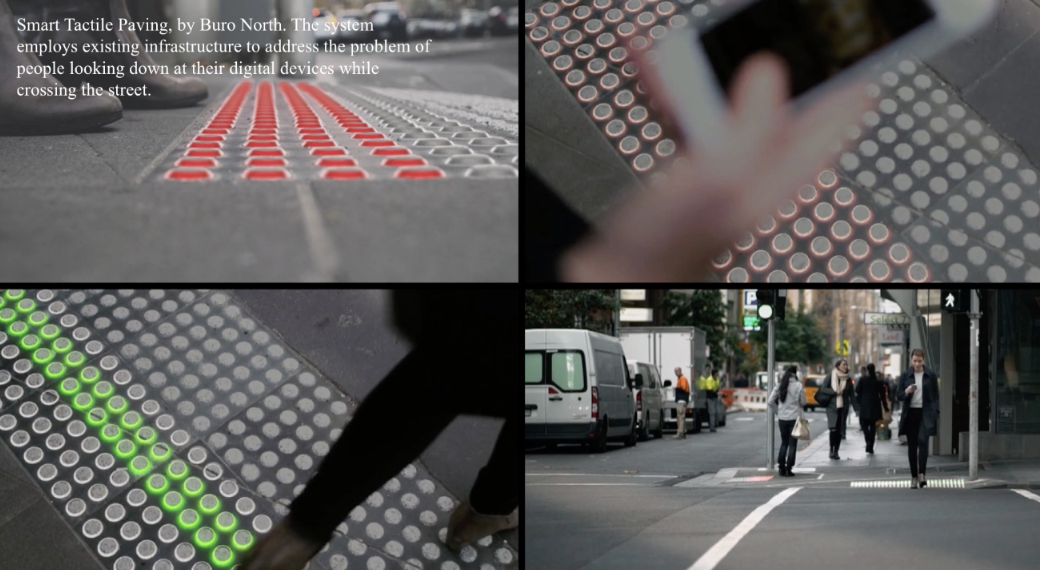
Ellen Lupton, a museum curator, says most museums ask you to do only one thing: look. And look, and look, until you're so tired you're grateful to reach the gift shop. So she designs exhibitions you can touch, smell, taste and listen to. Her quietly radical point is that when you design for people who can't see as the guiding principle, you end up with a space that's richer for everyone. A studio in Australia proposed putting lights into the tactile paving of crosswalks so people staring at their phones can still cross safely. Designing for one body made it better for every body.
Something interesting I came across was the original Underground maps and how geographically accurate they were, showing the real distances, every curve of the track, and the lines tangled over the actual shape of London. They were all technically true, and almost useless to someone standing on a platform, who only needs to know which line goes where, where the stops are and where to get on and off…
In 1931, Harry Beck redrew the London Underground map and made it less geographically accurate. He straightened the lines, evened out the stations and threw away the real distances. Passengers didn't need the truth about the curves. They needed to know where to get on and off. Accurate and useful are not the same thing.
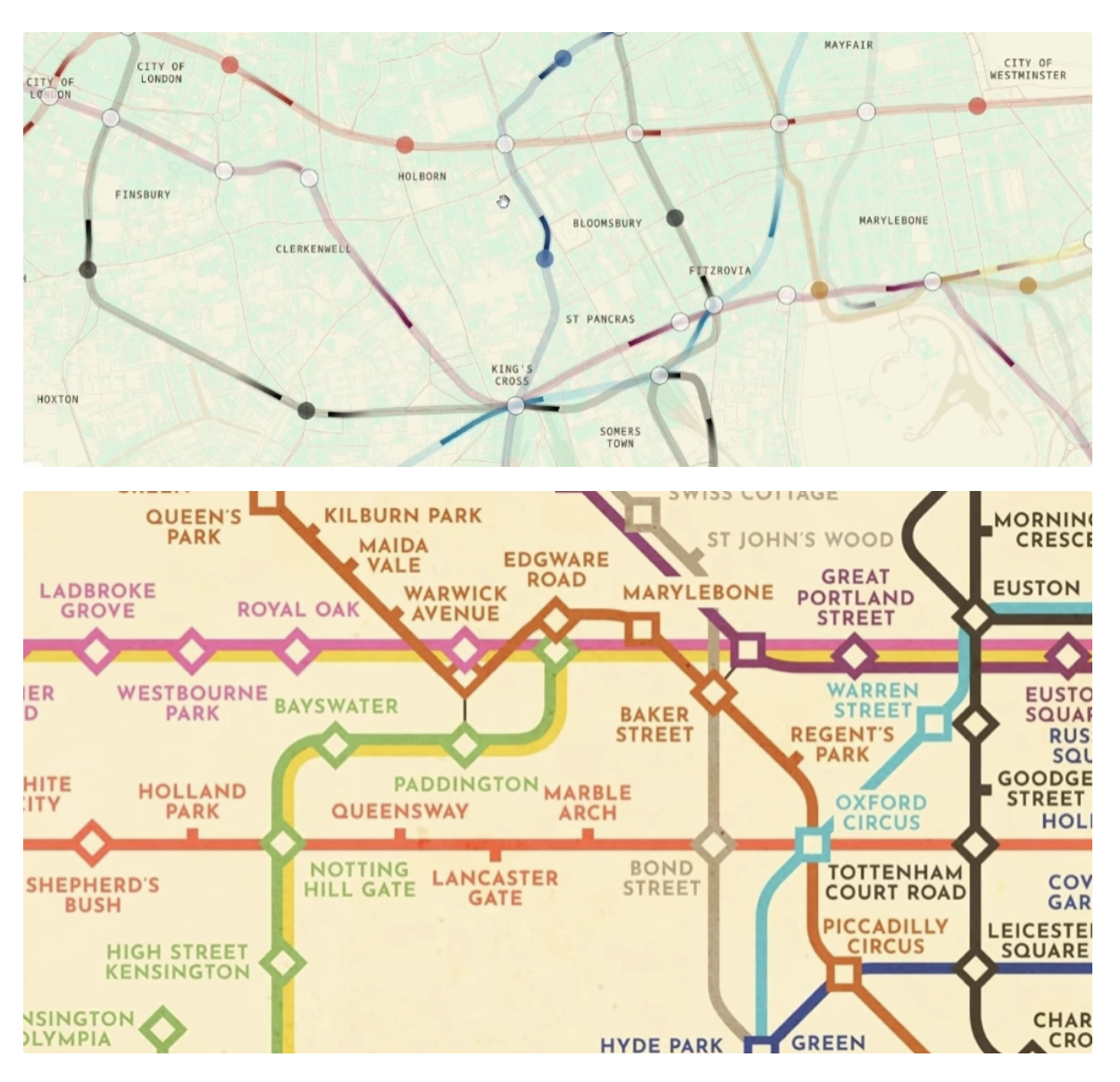
Original map vs Beck’s revision of it.
A good design doesn't show everything; it shows what matters to the person interacting with it.
That's the thread through all of it. The Museum of the Future cut away everything that couldn't answer its questions. Beck cut away geography. The Barbican cut away the rush in from the "outside world".
It's the same lesson as my earlier noticing blog, What Is This Gathering Actually For? But seen from the other side. There, the need came first. Here, I'm learning how the five senses are the modality you use to deliver it.
Scent, sound, sight, space, touch, and host are six ways of saying the same thing to someone's body.
So if I want something to stay with a person long after they've left, I can't stop at how it looks. I have to decide what should shift in their body. It could be a slower breath, a lump in the throat, the sudden urge to talk to a stranger or connection and design backwards from there.
Notes for the next event I host.
Artemis,
Decide what the room should do to the attendee before what it should look like. Pick one verb to start with. Is the aim to make them feel calm, awake, to bond, or to slow down? If you can't pick one, you're not ready to choose a single colour.
Build the threshold. Give people the context before they walk in to prime them for the experience… Experiment with using an omnipresent narrator playing on a speaker as attendees enter the room/event. That little room at the start of the exhibition in the Barbican did more work than the installation it led to.
Design your next experience design project with a blind person in mind. If it only works through the eyes, it only half works, so for now let's tap into the power of sound.
Things I haven’t worked out yer.
If a scent or a sound works best when nobody consciously notices it, how do you prove to a client that it worked?
If Harry Beck could throw away geography, what is every event clinging to that nobody actually needs?
