
When Does a Room Become a World?
Why “does this look good?” might be the wrong question in experience design; what a twenty-sided dice taught me about building believable spaces; and why the most useful part of a creative brief might be everything you refuse to put in it.
The Pavement Was Still London.
Last month, I walked past the Royal College of General Practitioners in central London and noticed an event going on inside. I could tell because outside, standing in a queue on an otherwise very ordinary London pavement, was a group of doctors who looked incredibly sophisticated against the landscape around them. Not to mention their perfume reached you before they did.
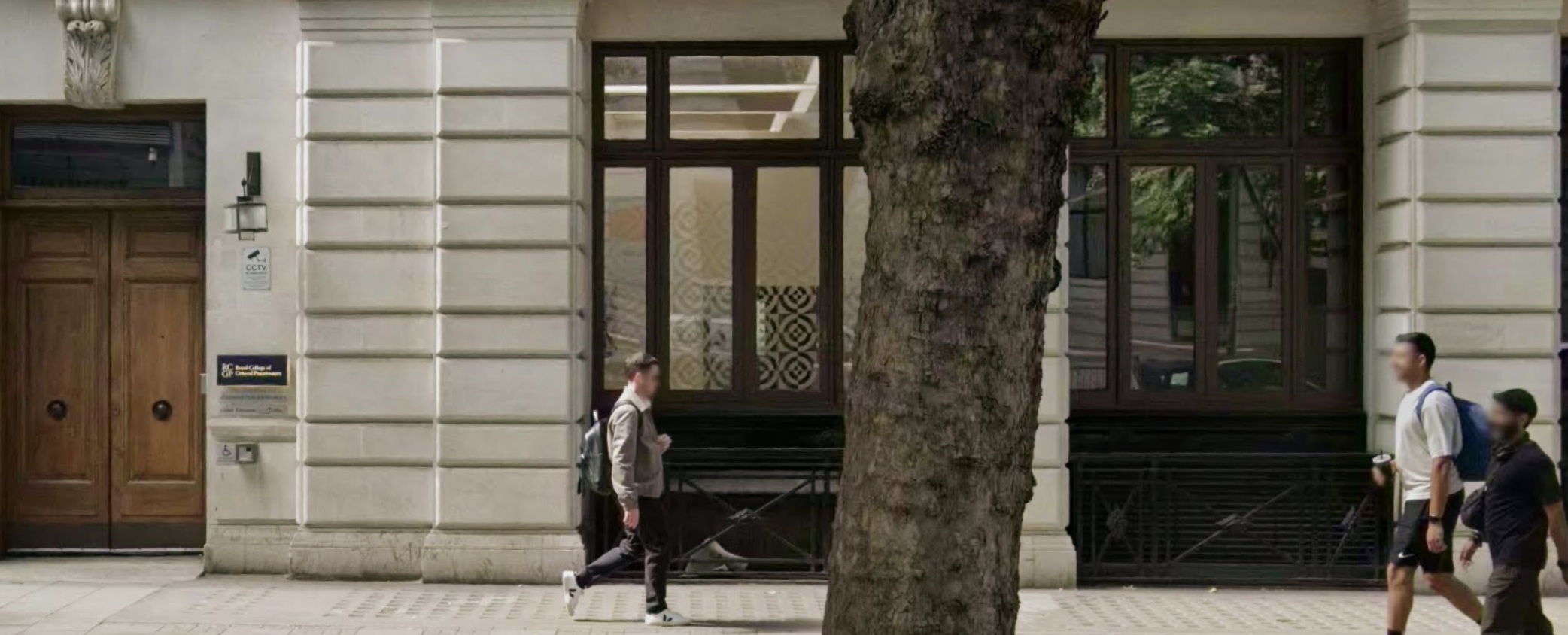
But there was something about the scene that I couldn’t shake.
They were clearly dressed for somewhere else, somewhere presumably beautiful and carefully considered, and yet at that exact moment they were still standing beneath ordinary streetlights, beside ordinary traffic, on an ordinary pavement.
Nothing about the space around them by the building suggested that they were about to enter a different world. There was no threshold, no friction, no moment that said: from here, different rules apply.
At first, I thought what had stayed with me was the entrance or lack of it, should I say.
Then I realised it was something much bigger than that.
I kept wondering about the difference between a room someone has decorated and a world someone has built.
Current working thesis on this matter.
A world is more specific and contains defining logic. Logic is what makes a space feel as though it existed before you arrived, for example, if you wanted a room to look and feel like a game show but you just put two buzzers on the table and moved on, this wouldn’t be believable.
And once I started thinking about spaces in this way, the difference between a decorator and a world-builder comes down to one very simple question.
The decorator asks: Does this look good?
The world-builder asks: Would this exist here?
The first question is about taste and the second asks taste to answer to logic.
The floor, the ceiling, the objects, the sounds, the entrance, even the empty corner that stays empty on purpose, all of it has to feel as though it belongs to the same place.
A world needs rules.
This summer, I had become slightly obsessed with constraints.
Not constraints in the sense of restriction for restriction’s sake, but constraints as a way of creating direction.
A goal tells you what you are trying to achieve. But a constraint tells you how the work is allowed to behave.
That distinction is incredibly useful because creative work can become strangely difficult when absolutely everything is possible. When every colour, object, material, reference, idea and aesthetic direction is technically available to you, there is nothing to push against. You have to invent every decision from nothing.
A constraint gives the work edges.
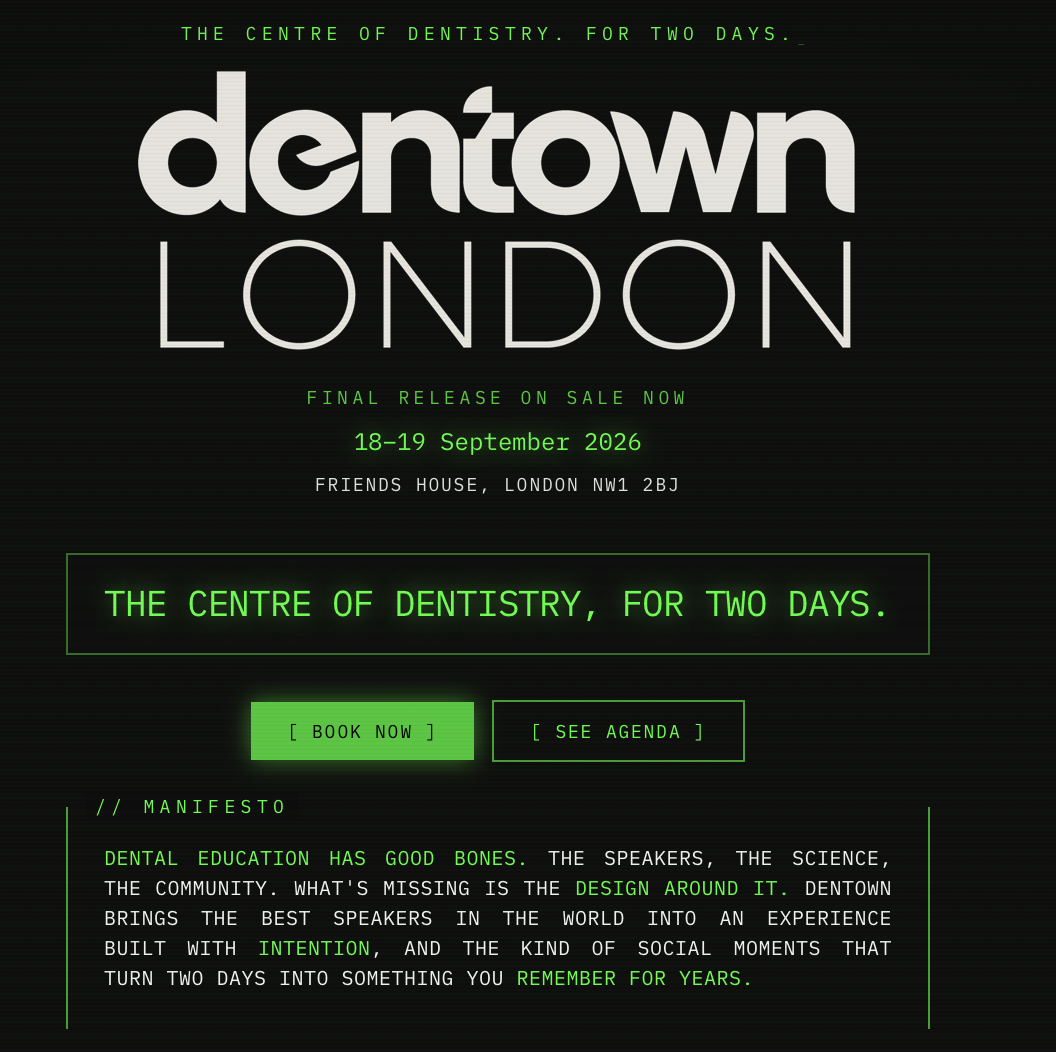
I was rereading the creative direction bible for “Dentown”, an immersive experience I’m currently working on alongside the Head of Experience Design.
The premise is that for two days, Friends House (venue) becomes a town for dentistry. Not one conference room divided into tracks, but a series of places: a Dentorium, a Business Hub, a Health Nexus, a Studio, each behaving differently.
I’ve been thinking about what makes that shift from venue to place actually land. A name or a banner on a door is not enough. The atmosphere has to change. The behaviour has to change. You should know, somehow, that you have arrived somewhere else.
Somewhere in the middle of rereading the creative bible presentation, I reached a page I had previously skimmed past.
It was called Creative Guardrails.
Underneath the heading was a section defining what the project was not and “Saying no is a creative act.”
I stared at it for much longer than I probably needed to.
I had never properly considered that defining what you do not want is the more powerful move.
The more I thought about it, the more obvious it seemed.
If the world has no limits, then nothing can really feel out of place.
And if nothing can feel out of place, then nothing really belongs either.
That is the problem.
Without guardrails, a world has no edges. And without edges, there is no world… there’s only a collection of things in one place.
This is where specificity becomes incredibly important.

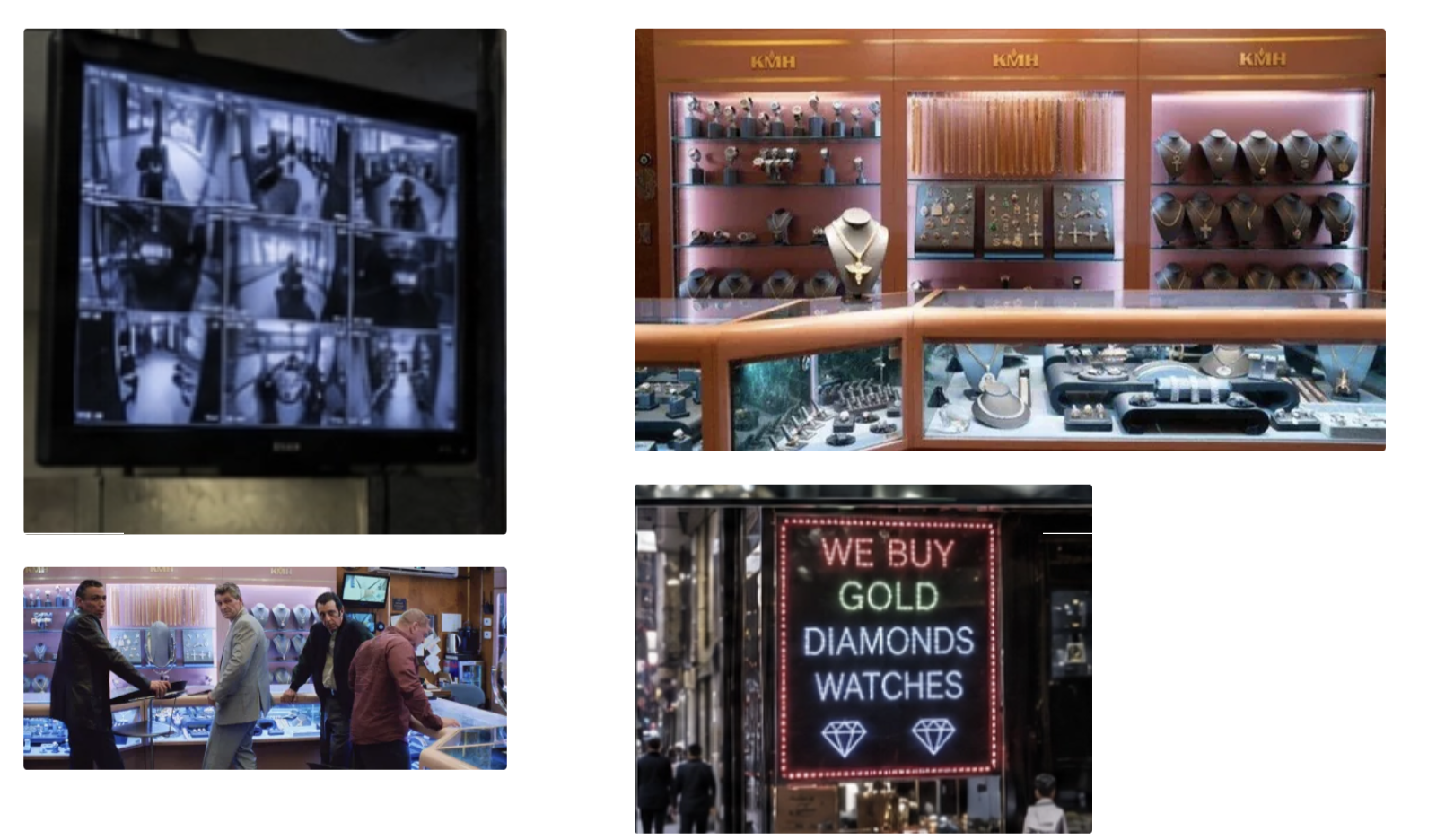
Let’s say you want the set design for a room to be a “jewellery shop”, but this tells you very little. However, a very specific 2012 New York Diamond District jeweller’s shop owned by Howard Ratner (as seen in the 2019 crime thriller movie “Uncut Gems”) suddenly gives you something real to work with.
The more specific the world becomes, the easier it is to decide what belongs inside it and what does not.
This is why I now want to begin any temporary world with questions that sound almost annoyingly precise.
What happened here before we arrived?
What does this place value?
What would never exist here?
What kind of object would look completely wrong?
What does the world allow?
What does it refuse?
Those questions feel much more useful to me than simply asking whether something fits the moodboard.
For example, I was considering how you’d apply this logic to a hotel from a past era. The normal way of thinking might be to add velvet curtains, brass lamps and vintage keys.
Sure.
But now if you give the world rules…
Rules: nothing manufactured after 1994 can be visible, nothing should look newly bought, every object needs some evidence of use, staff behave as though the hotel never closed and any modern technology has to disappear or be translated into the world’s language.
Now the design starts arguing back.
The Bluetooth speaker is now a problem as it wouldn’t fit “in-world.” The acrylic sign is a problem. The pristine menu is a problem. The furniture that looks suspiciously fresh is a problem.
You aren’t asking whether any of these things are beautiful; instead, you’d be asking whether they belong. That is the moment a room starts becoming a world.
The twenty-sided dice altered my view on world-building
On my quest to understand how a temporary physical world could feel real, I started looking at fantasy writers and fictional world-building because, really, that is all they do. They create places that do not exist and somehow persuade us to accept them.
And I kept coming back to the game Dungeons & Dragons.
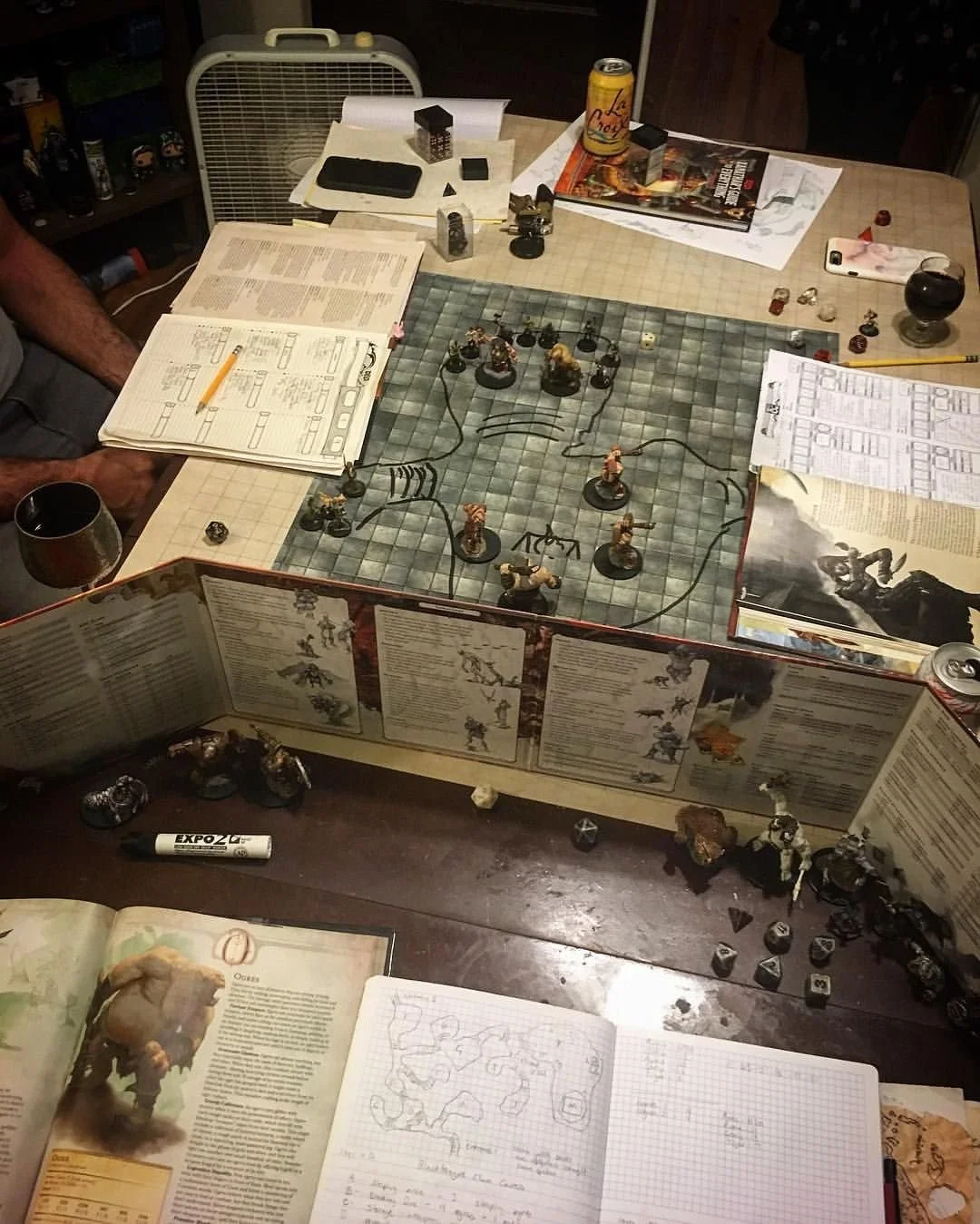
I had heard of D&D before. I just had absolutely no idea what people were actually doing for hours around a table.
The basic structure is that one person becomes the Dungeon Master and governs the world, while everyone else plays a character inside it. Players decide what they want their characters to do. When something uncertain happens- jumping across a gap, attacking a creature, trying to open something, persuading someone- the outcome is resolved through a set of rules, often using a twenty-sided dice.
What fascinated me was not really the dice.
It was the relationship between freedom and structure.
Players can do almost anything, but they don’t operate in chaos. The world already has an internal logic. Their choices matter because the world knows how to respond.
That completely rearranged my thinking.
What keeps people returning to the same imagined world for months is not that absolutely anything can happen. It is that anything can happen within a world that has already decided how it works.
The rules are not a restriction on the experience.
The rules are the experience.
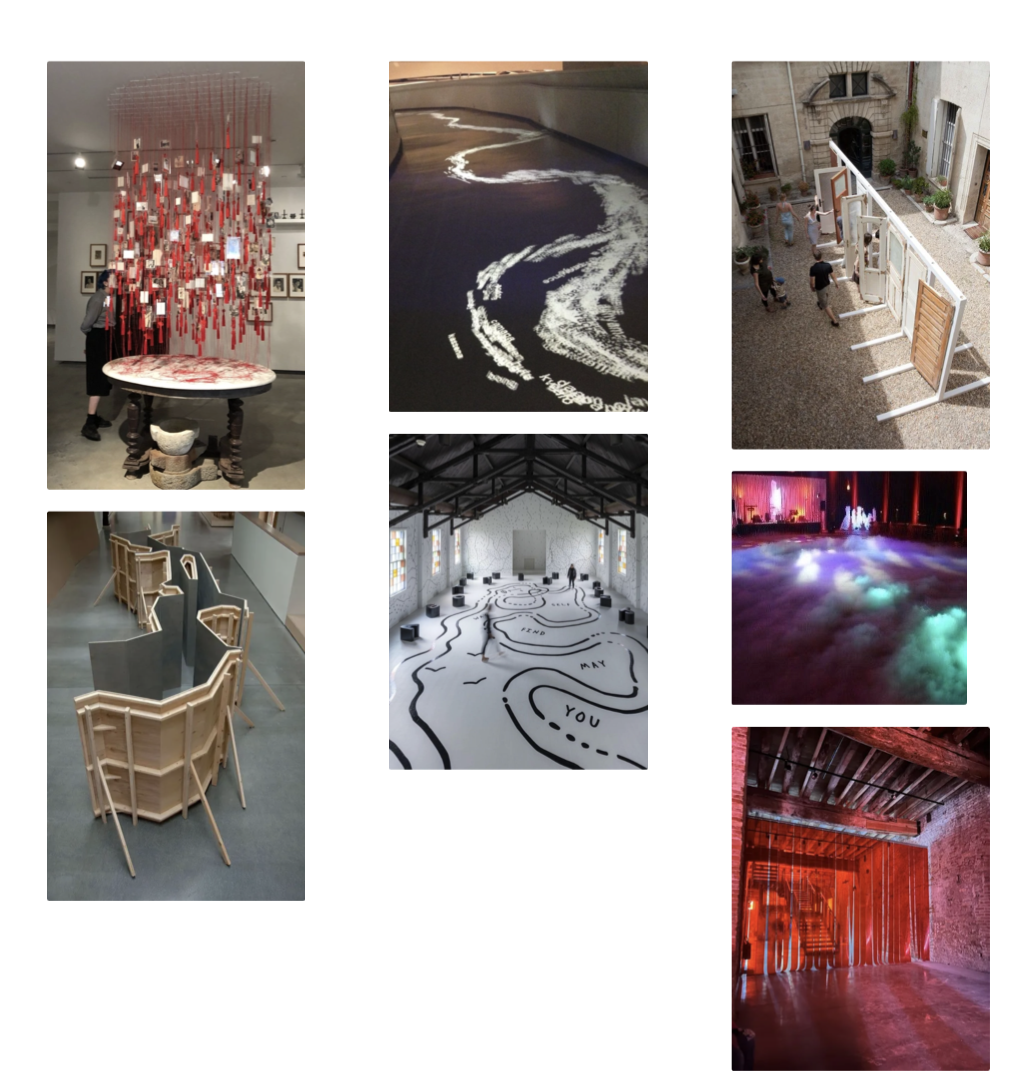
Once I saw that, I started thinking about physical space the same way. A temporary world should not just be something a person looks at. It should feel as though it has its own logic, and that logic should reveal itself as they move through it. Someone should be able to enter and, almost unconsciously, start wondering: what happens if I do this? Not because the space is confusing or difficult, but because it seems capable of responding.
Ideas I had included designing an entrance that forces you to change direction are: implementing sound shifts for when you enter a particular area, the floor telling you where you are allowed to stand via stickers or projector lights, a timer ticking in the air causing pressure and raised stakes, and more.
Small things, but all of them telling you the same thing: you are not in the ordinary world anymore.
And this is also where my definition of an immersive experience is changing.
I used to think of immersion as something additive: more objects, more sound, more spectacle, more things occupying the room.
Now it may be almost the opposite.
An immersive space does not contain a lot.
It seems to know what it is.
A place where the world responds to you, where every decision appears to belong to the same internal system, and where something would feel noticeably wrong if it broke that logic.
I used to think world-building meant deciding what to put inside a space.
Now I'm more interested in asking: what would this “world” refuse?
The difference between a decorated room and a believable one isn't how much you've added.
It is whether everything inside it belongs.
Notes for the next event I design.
Artemis,
Write the rules before you open a mood board. One page. What does this world permit? What does it refuse? If you can’t answer both, you’re not building a world. You’re decorating a room.
Ask “would this exist here?” about every single thing. Not “does this look good?” The first question produces worlds. The second produces sets.
Things I haven’t worked out yet.
How do you design the arrival, the moments before someone even reaches the door? The doctors on the pavement are still on my mind.
When a space has no guide, no Dungeon Master, no host at the entrance, how does a person learn the world’s rules without being told them and not being confused?
How do you decide which parts of the world deserve the budget? If you cannot build everything, what few things make the rest believable?
